Less plastic, more planet

April 21, 2026
Zero in on waste
When everyone works to prevent and reduce plastic pollution, we’re helping protect the places we all rely on. From city streets and beaches, to rivers, lakes, and marine waters, plastic can travel farther than we expect—and every effort to keep it out of nature matters.
Freeing the sea
Using AI and side-scan sonar, WWF Germany and the Microsoft AI for Good Lab help locate industrial-grade plastic ghost nets for retrieval.
Packaging reimagined
At the end of 2025, Microsoft removed nearly all single-use plastic in our primary product packaging—without compromising quality, accessibility, or customer experience.

People behind the progress







Guardians of the planet
With earlier smoke detection and clearer insights into remote locations, researchers and conservationists are using AI to help preserve and protect ecosystems around the world.
More stories
-
Catching wildfires early
ALERTCalifornia, a UC San Diego-based statewide wildfire monitoring program, uses a large network of high-resolution cameras and sensors to monitor California’s landscapes.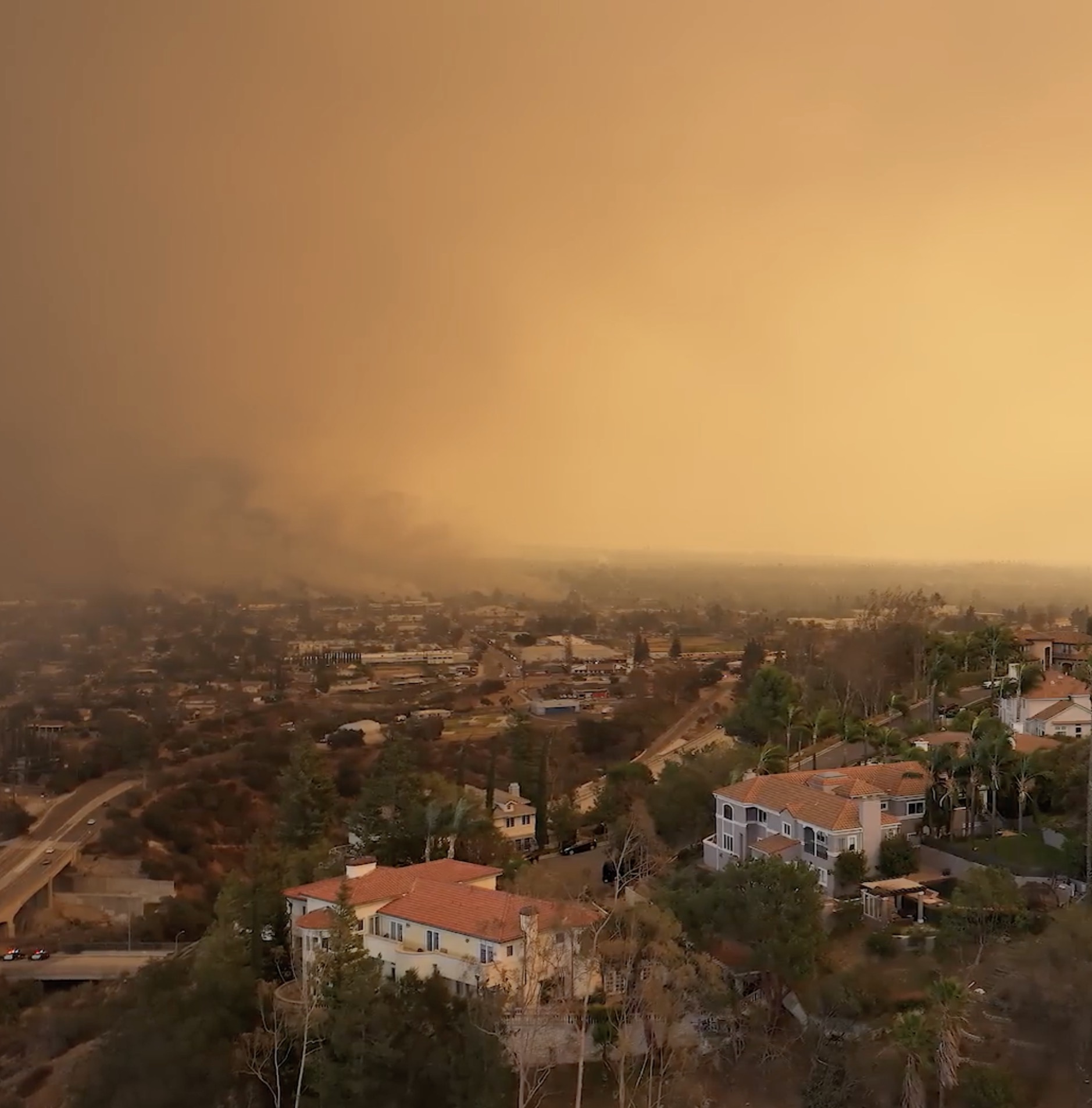
-
Protecting the Amazon
Project SPARROW combines solar-powered camera traps and acoustic sensors with AI to monitor and protect biodiversity in remote environments.
-
Watching each unique spot
In Tanzania, giraffe populations have dropped significantly. To help reverse that, the Microsoft AI for Good Lab partnered with Wild Nature Institute to launch GIRAFFE.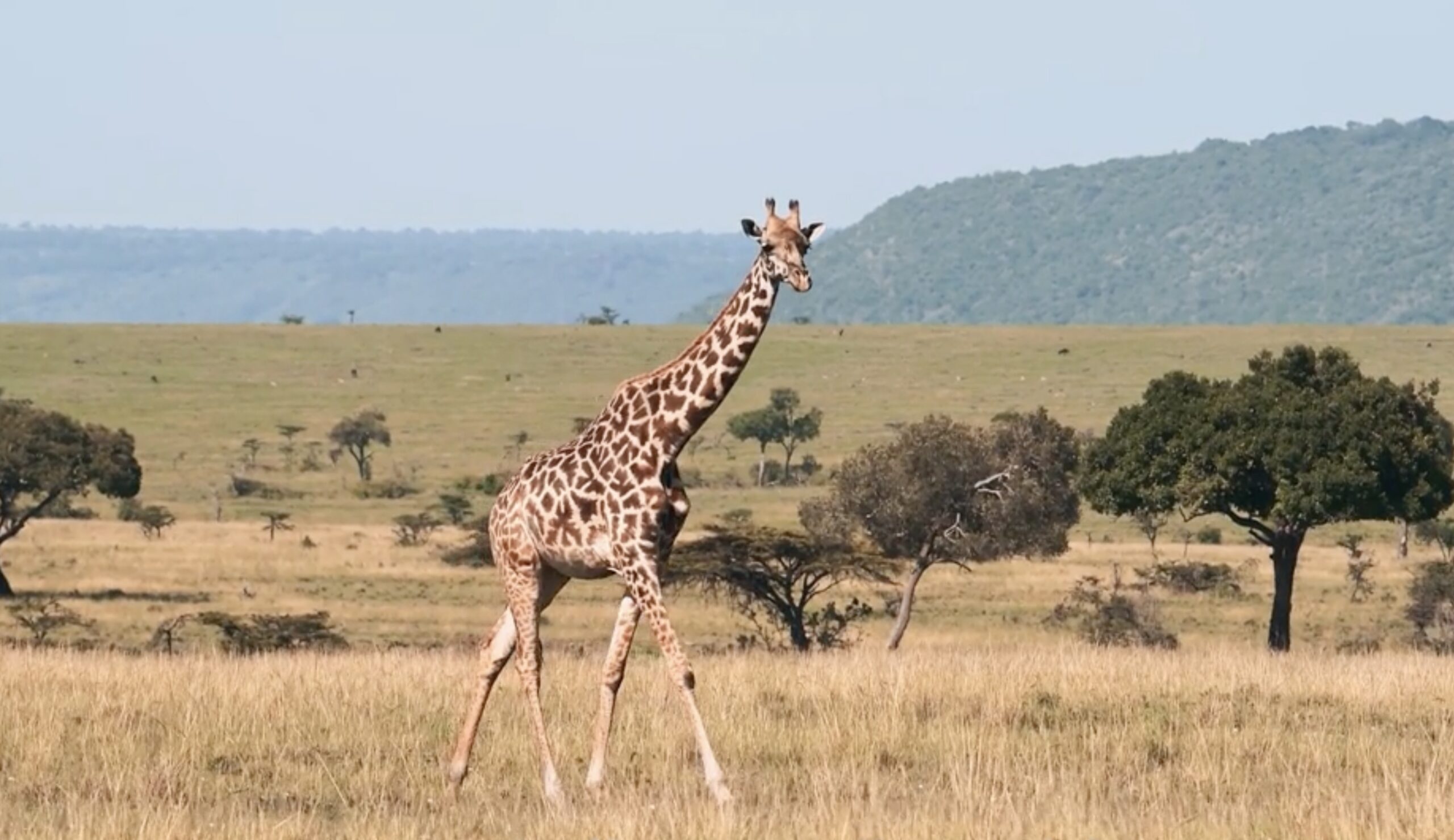
On common ground
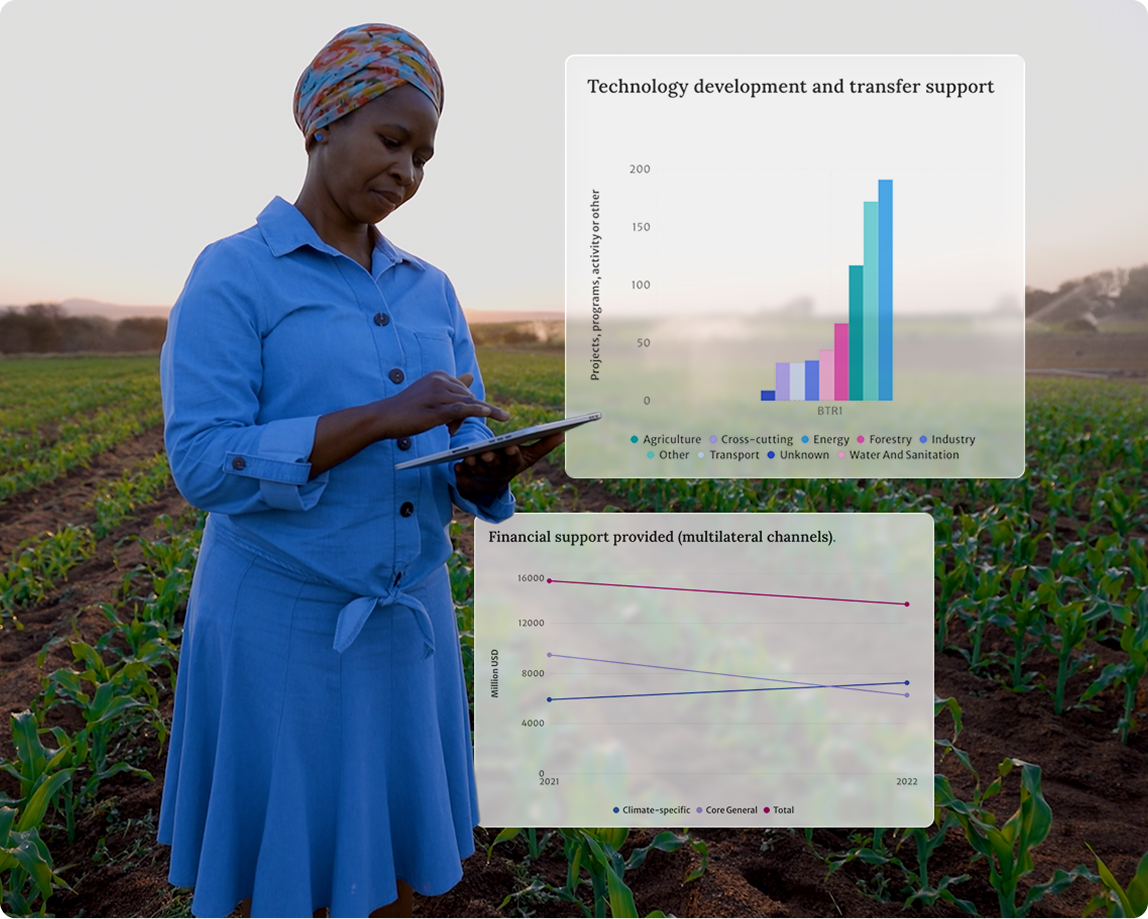
Climate action runs on data—but too often that data is scattered across formats, systems, and sources, making it hard to see what’s working and what needs to change. To help solve this problem, the United Nations Framework Convention on Climate Change (UNFCCC) partnered with Microsoft and EY to build the Climate Data Hub, an AI-powered platform designed to bring climate information together and make it easier for everyone to use.
Built on existing UNFCCC infrastructure and powered by Microsoft Fabric and Power Platform, the Hub unifies complex climate submissions from 198 countries into clearer, more accessible insights. Everyone from UNFCCC staff, country parties, non-party stakeholders, and the public can better understand progress and take informed action. The Hub also flags anomalies and turns climate commitments into practical, real-world implementation—especially for countries with fewer resources.
Driven by bold commitments
Climate action starts with asking bold questions, and investing in even bolder solutions. As we navigate the promise of AI to accelerate solutions amid resource intensity, we’re keeping our pledges to advance sustainability for all.
Lorem ipsum dolor sit amet
We had to have a change of paradigm in how we address packaging.
So long, single-use
How Microsoft eliminated single-use plastics from its packaging
Unboxing a new Surface laptop feels like a simple, joyful moment—the hinged lid can be lifted with one finger, and instead of fighting plastic wrap and trays, everything unfolds in clean paper—tabs, sleeves, a molded fiber cradle. Like the box was designed to welcome you, not waste materials, or your time.
Behind that experience is a complete reengineering of how products are protected in transit. In 2020, Microsoft committed to becoming a zero-waste company by 2030, setting an ambitious goal to eliminate single‑use plastics (SUP) from packaging across both legacy and future consumer devices. This goal launched Project Alder, a cross-disciplinary effort spanning packaging design, engineering, supply chain, sustainability, legal, and global suppliers—all working to prove that devices could reach customers safely without relying on plastic.
Materials like foam inserts and laminate coatings historically protected products from damage, so replacing everything was more than just a simple material swap. Transitioning to fiber‑based alternatives meant solving each of those challenges from first principles while maintaining millimeter-level precision. Ensuring reliability without compromising the customer experience required months of experimentation, including the creation of 1,165 packaging prototypes.

Fiber releases particulate dust under repeated drops and temperature shifts. It forces solutions like a bamboo bag to catch dust from getting into each device.
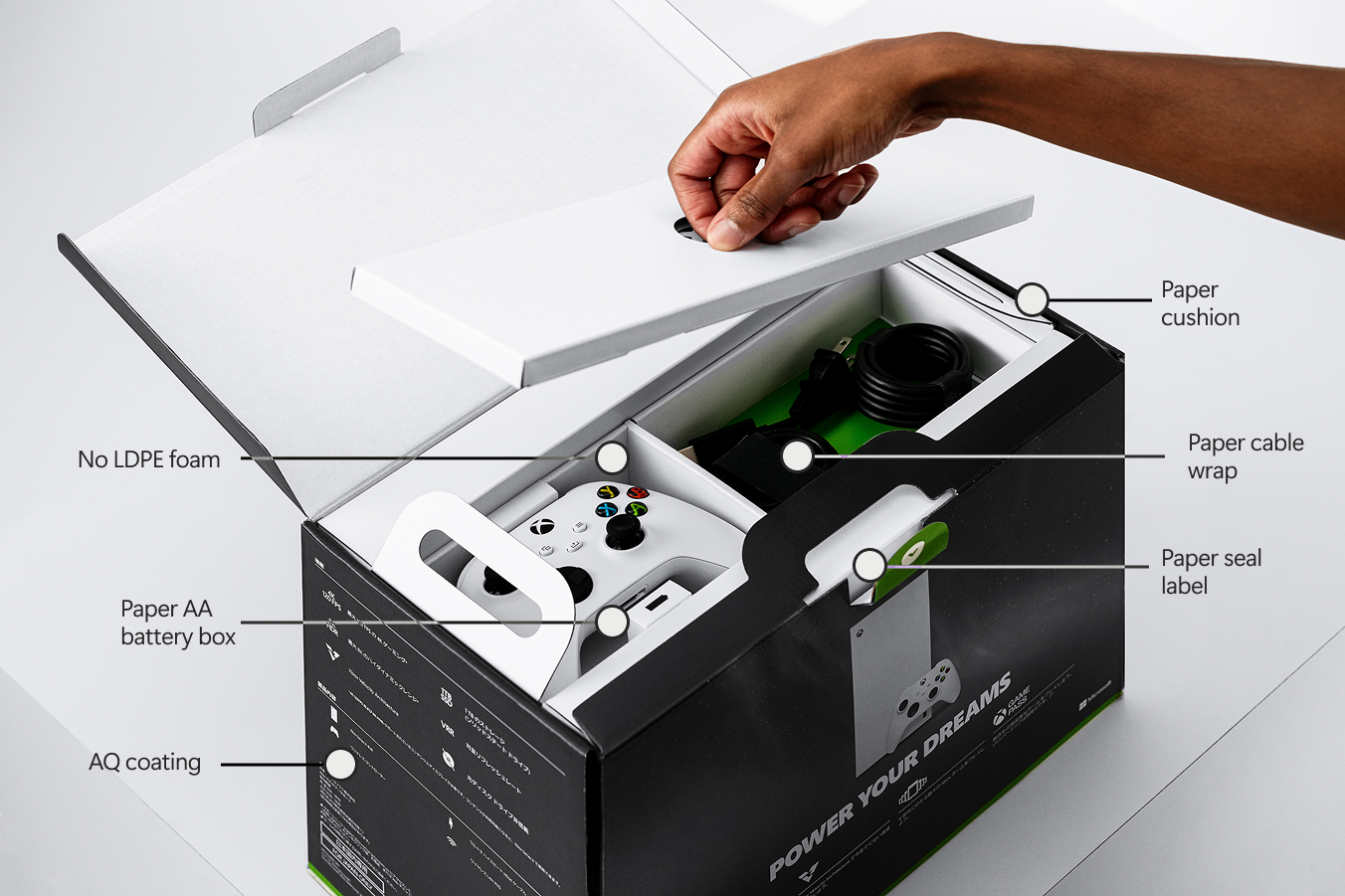
Labels keep the Xbox packaging closed. The geometry had to be precise: a variance of one to two millimeters risked scratching the device or damage during transit.
After 1,165 prototypes, engineers landed on interlocking paper‑based cushioning designed to flex under load. Removing a foam layer made the packaging for the Xbox Series X|S console options 14% smaller!
By the end of 2025, Microsoft had eliminated nearly all SUP from its primary product packaging, reducing it to just 0.07% across its global portfolio. The shift also enabled smaller packaging designs—like a 14% reduction in the Xbox MidGen box—improving shipping density and lowering downstream environmental impacts such as fuel use and CO₂ emissions. For most customers, the innovation remains invisible. But every fiber‑based tab, molded cradle, and paper hinge reflects a deliberate redesign of how products can be delivered with sustainability in mind.
Plastic is not paper and paper is not plastic. They do not behave the same way… How can we solve that, not just put a band aid everywhere.
With 1,200+ cameras operating 24/7 and AI at the edge operating 16x per second, this will save lives.
Wildfires can gain dangerous momentum before anyone knows they’ve started, making rapid detection essential to limiting impact. ALERTCalifornia, a UC San Diego-based statewide wildfire monitoring program, provides earlier visibility through a large network of high-resolution cameras and sensors to monitor California’s landscapes in real time.
Through a research collaboration, the Microsoft AI for Good Lab works with ALERTCalifornia to apply advanced AI and Azure cloud computing to spot early signals, like smoke, giving firefighters and emergency managers clearer, faster intel. That early insight can improve response time and increase the chances of stopping a small ignition before it grows into something far more destructive—often before the first 911 call.
Beyond strengthening wildfire response, the collaboration is also opening new opportunities for long‑term environmental monitoring. ALERTCalifornia archives camera footage across its statewide network, creating a valuable record that researchers can use to better understand how climate change is affecting habitats. Endangered species like California condors are frequently spotted within view, offering a window into sensitive habitats over time.
With faster image transmission and near‑real‑time recordings, emergency managers can study smoke and fire behavior in the earliest moments. When every minute matters, this helps them assess severity and make quicker, more informed decisions.
Lorem ipsum dolor sit amet, consectetur adipiscing elit, sed do curabitur.
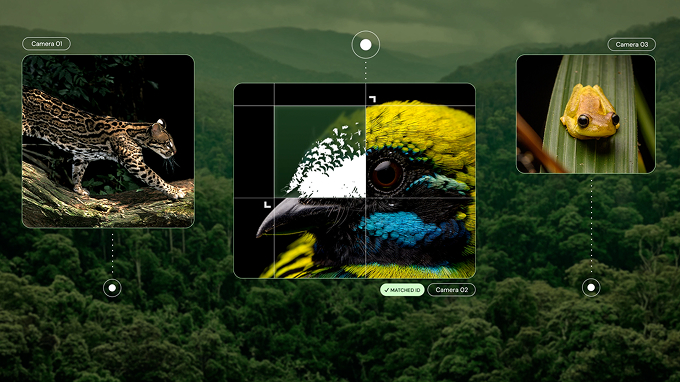
In Colombia’s Middle Magdalena Valley—one of the most biodiverse regions on Earth—scientists are working to protect ecosystems that are increasingly under threat from deforestation and human activity. Home to thousands of plant and animal species, this landscape holds vital clues to the planet’s health. But for years, the biggest challenge has been sorting through the overwhelming volume of recordings captured by remote cameras and microphones placed in remote locations.
Now, through Project SPARROW—Solar-Powered Acoustic and Remote Recording Observation Watch—an AI-powered solution developed by the Microsoft AI for Good Lab, researchers are turning that flood of information into real-time insight. Solar-powered acoustic monitors and camera traps, equipped with advanced sensors and edge AI models, can detect wildlife activity and potential threats as they happen. Even in the most remote environments, data can be transmitted via low-Earth orbit satellites to the cloud, helping conservation teams protect and preserve nature without needing to physically retrieve devices from the field.
The result is a clearer, more immediate picture of ecosystems that have long remained out of reach. Researchers are already uncovering hidden animal behaviors that offer a new understanding. By combining AI with on-the-ground expertise, Project SPARROW is helping scientists observe the rainforest in entirely new ways.
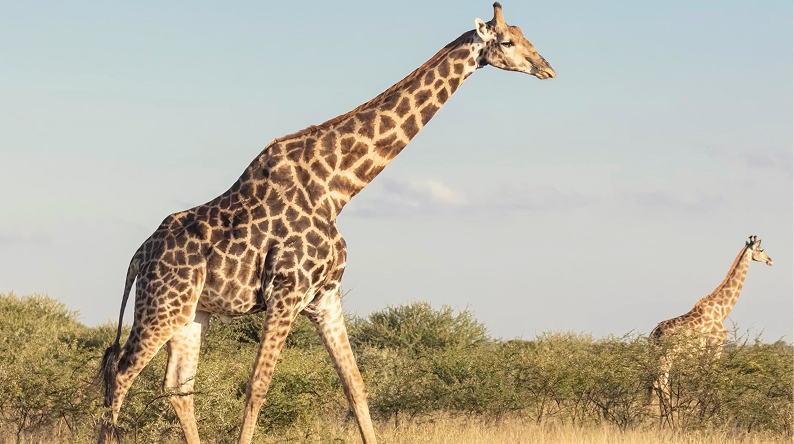
We have 1,500 photos for each giraffe survey. The human eye could not do that. It’s big data for big animals.
In Tanzania, giraffe populations have dropped by more than 50% over the past 30 years. To help reverse that trend, the Microsoft AI for Good Lab partnered with the Wild Nature Institute to launch GIRAFFE—Generalized Image-based Re-Identification using AI for Fauna Feature Extraction—an open-source AI tool that uses computer vision to identify individual giraffes. This gives conservationists better data on survival, movement, and reproduction to help stabilize and protect giraffe populations.
In 1956, Dr. Anne Innis Dagg, a 23-year-old Canadian scientist, traveled alone to South Africa to study giraffes in the wild. What she noticed was deceptively simple—no two giraffes share the same spot pattern. Like fingerprints, those markings could be used to recognize individuals over time. Seventy years later, that idea is helping power a new generation of conservation tools.
By turning thousands of field images into usable data in minutes, GIRAFFE gives scientists more time to understand what’s happening in the wild. And its potential goes beyond giraffes—this same approach could be adapted for other patterned species like zebras and whale sharks. GIRAFFE is helping conservationists better understand and ultimately protect the wildlife they care for.