January 23, 2026
Over 2,500 languages are at risk of disappearing
Every few months, a language moves closer to extinction.
As speakers age and fewer people learn it, the practical knowledge the language carries becomes harder to pass on. As the history of stories and song begin to fade, the identity of a community quietly unravels—the loss is intimate, the world a little less vibrant. By the end of this century, thousands of languages could be gone, leaving only echoes of names for the wind, or rituals that honored the land.
Recognizing what’s at stake, UNESCO designated 2022–2032 as the Decade of Indigenous Languages. This highlights a global effort to support revitalization and digital inclusion, and the work that partners in places like Nunavut are helping advance. According to the UNESCO Atlas of World’s Languages in Danger, over 2,500 are at risk of disappearing, and with each loss, centuries of wisdom and tradition vanish.
“Language determines who gets to use AI—remaining inaccessible when people can’t engage with it in their own language,” says Inbal Becker-Reshef, Managing Director, Microsoft AI for Good Lab.
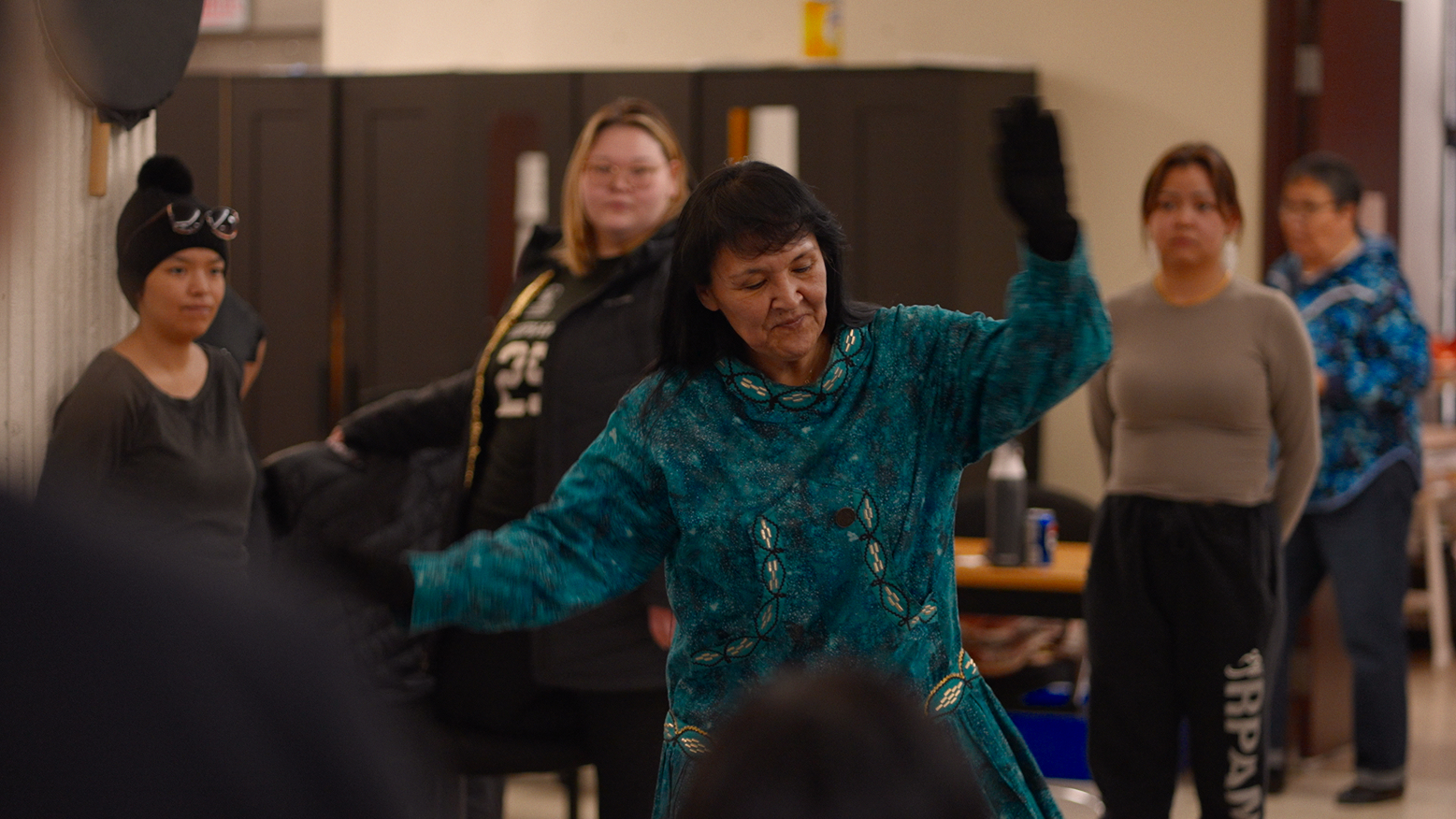
Over 70% of Inuit in Nunavut report Inuktut as their native tongue
Preserving heritage, empowering community
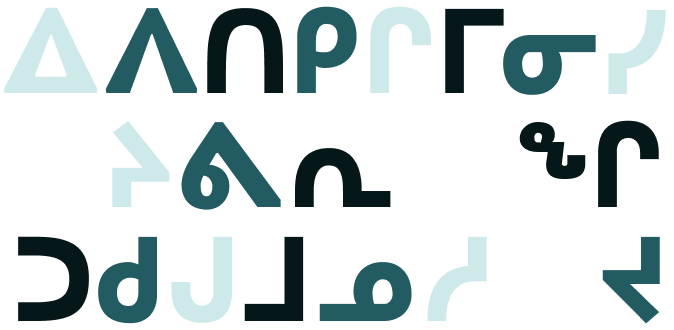
Nunavut is Canada’s largest, northernmost territory encompassing most of the Canadian Arctic with half of it in the Arctic circle. Home to over 30,000 indigenous people, Nunavut means “Our Land” in Inuktut, or the unifying term to encompass both the Inuktitut and Inuinnaqtun dialects.
For a long time, Inuktut didn’t have adequate translation tools or large language models (LLMs) that reflected its dialects. This made preserving the language for future generations with digital tools an almost impossible task.
In an effort to preserve and advance Inuktitut, the Government of Nunavut partnered with Microsoft to help people communicate in both English and Inuktitut while building a robust, community-owned translation memory. By working closely with the Government of Nunavut and the communities to gather language data, Microsoft helped bring Nunavut’s traditional dialects into modern digital environments by adding the Inuktut family of languages to Microsoft Translator, supporting community-led preservation and use.
The approach centers on codesign with local partners to establish governance and consent, source community approved text and audio, curate and label data with local reviewers, and validate outputs against cultural and linguistic norms. That process—grounded in stewardship—builds trust so models reflect lived language and are embraced locally. Together, these complementary efforts improve real-world communication. Healthcare providers can collaborate more easily across distance, youth in Nunavummiut generations can connect more fully with elders, and people can create, communicate, and translate in the language they choose. Today, educators are adding feedback on students’ report cards in Inuktitut, engaging better with unilingual families.
The work has continued with a partnership with the Microsoft AI for Good Lab, working together to develop a pipeline for adapting open-weight large language models (LLMs) to low-resource languages, like Inuktitut.
“Working really closely with the Government of Nunavut was critical for them to be able to trust the models and ultimately adapt and use them,” says Inbal Becker-Reshef.

Located in Canada’s northernmost territory, Nunavut is home to a majority Inuit population.
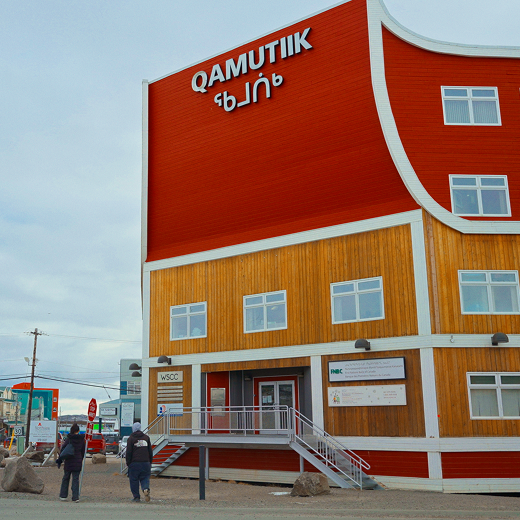
About 85% of Nunavut’s population speaks Inuktitut, a language with several dialects.
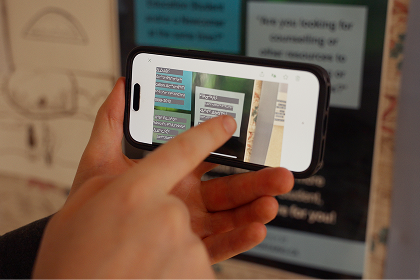
In the Translator app, users can connect across languages with a photo, speech, or text.
Supporting the advancement of all languages
As AI adoption accelerates worldwide, the inclusion of low-resource languages has become a critical issue. Language is the gateway to education, healthcare, and economic opportunities, and without intentional inclusion, entire communities risk falling behind. Microsoft’s approach is open source, ensuring the tools and datasets developed for language preservation and revitalization are available to communities, researchers, and partners everywhere. By making these resources accessible, governments can engage better with communities as the diffusion of AI champions local voices to shape the future of technology.
“Across Microsoft, we make sure Indigenous communities take the lead, bringing heart and rigor to our partnerships. We collaborate with respect, consent, and shared accountability,” says Mike Adams, Indigenous Inclusion Network Executive Sponsor.
The Microsoft AI for Good Lab has developed a reproducible pipeline for adapting open-weight LLMs to low-resource languages. This framework empowers partners and advocates AI tools tailored to their communities, regardless of the language’s digital footprint. Global projects span Inuktitut in Canada, Māori in New Zealand, Chichewa in Malawi, and Swahili across East Africa. And through its LINGUA initiative, Microsoft is funding and strengthening projects that create high-quality datasets for underrepresented languages across Europe. By sharing technical blueprints and collaborating with local experts, every language can benefit from the latest advances in AI.
From a cultural perspective, it’s critical for people to be able to communicate in their own language. AI brings great power to people, but they shouldn’t need to learn another language to use it.
Building an AI future for all
Recent research from the AI for Good Lab highlights that countries where low-resource languages are predominant exhibit significantly lower AI adoption, showing that language inclusion is an independent and powerful driver of AI diffusion. The dominance of English on the web—where half of all content is in English, yet only 5% of the world speak it natively—means that AI models often struggle with other languages, perpetuating global inequities.
AI is the fastest-growing technology in history—1.2 billion people already use it, but billions of others can’t. Many don’t have access to the foundations that make AI possible, like electricity, internet, and digital skills. Diffusion happens when everyone makes new tech part of how they live, work, and learn, but without addressing and closing the gaps, we risk creating a new digital divide. To avoid repeating past inequities—where transformative technologies reached some but not all—AI inclusion must be paired with foundational access to electricity, connectivity, and digital skills. Getting capable tools into the hands of all communities is how democratization becomes real.
The first AI Diffusion Report from the Microsoft AI Economy Institute reveals that impact comes from diffusion—when technology integrates with real life. In the age of AI, the inclusion of all languages can inspire every community, honor every culture, and ensure that everyone can participate in the digital age. By embracing linguistic diversity, new opportunities emerge for learning, connecting, and innovating.
It’s really about making sure these kinds of technologies that are so transformational for us are equitably distributed.