A co-teacher for every classroom

September 10, 2026
Ashley Hernandez’s student refused to wear a seat belt on the bus to school. Nothing could persuade him to buckle up.
Concerned for his safety, Hernandez used Copilot to create a social story—a visual guide to help him understand why wearing a seat belt mattered. She personalized it with images, then sat beside him and read it aloud.
Then something changed: He began boarding the bus and willingly fastening his seat belt.
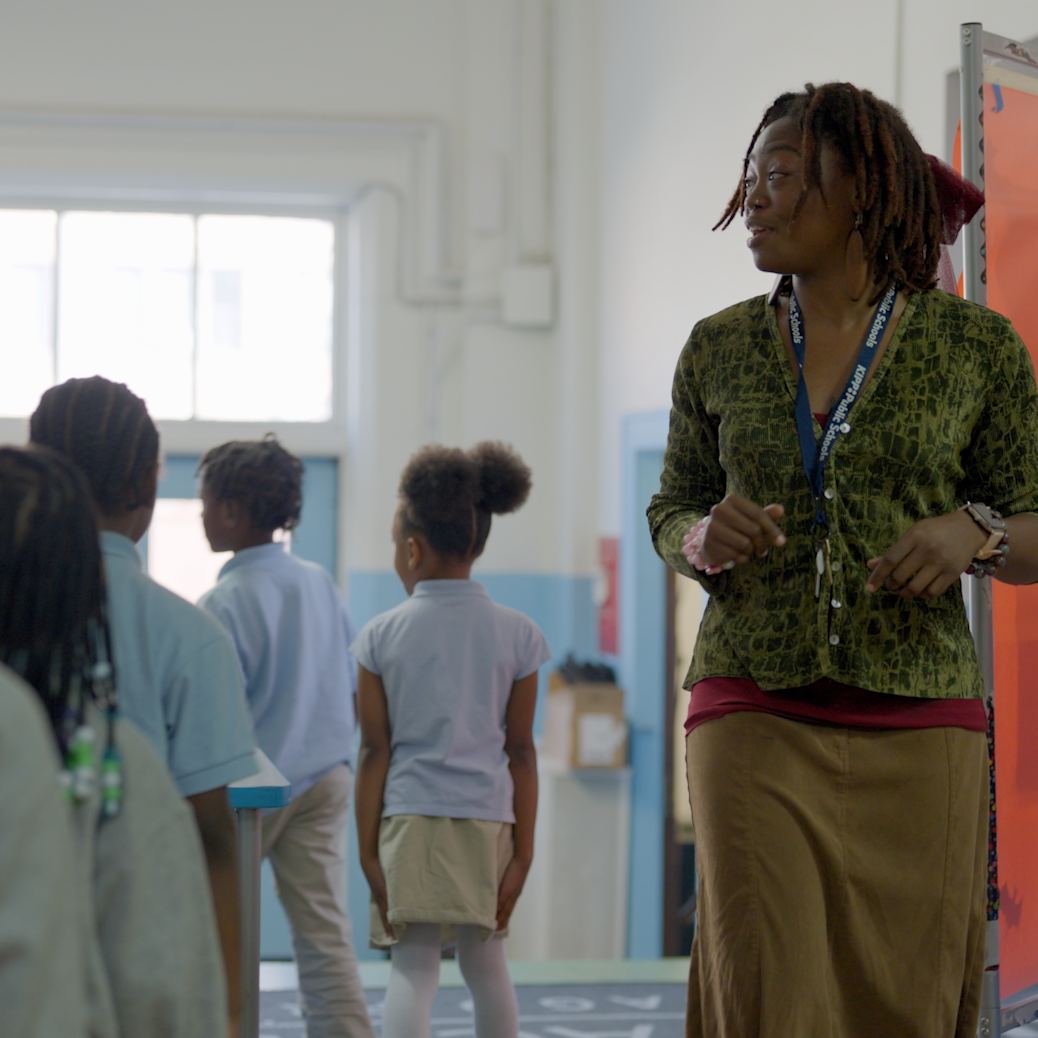
The moment may seem small, but for Hernandez, a special education teacher at New York City Public School District 75, it was a big win—showing how technology could help her better connect with her students.

Ashley Hernandez
Special Education Teacher
New York City Public School District 75
Taking teaching personally
“Special education teachers have to personalize learning for each of our students,” Hernandez says. “But it’s really hard to do that when you have such a different range of disabilities in one classroom.”
This challenge sparked her interest in enrolling in the National Academy of AI Instruction for K-12 teachers—a partnership between the American Federation of Teachers (AFT), National Federation of Teachers (NFT), and lead technology partner Microsoft.
The Academy taught her how to personalize learning efficiently with more effective prompts, quality AI-generated content, and how to ensure accuracy, accessibility, and responsible use. Now, she uses Copilot to create targeted materials in half the time.
“Copilot has been essentially like a co-teacher,” Hernandez says.
“The goal of the Academy is to make sure educators have the agency and expertise they need to feel confident using AI—and also how not to use AI,” says Randi Weingarten, AFT president.
They aim to reach 400,000 participants across the U.S. over five years via in-person instruction, virtual learning, credential pathways, and future regional hubs.
With Copilot, teachers remain in the driver’s seat—so they decide how to best expand teaching and learning.
A lesson in continuous learning
Knowing how each student learns is the starting point for developing all of her materials with AI, says Hernandez. ”Teachers have to have the opportunity to not only navigate these tools, but to guide them, tend to them, and ask the tough questions about them.”
So far, Hernandez has used Copilot to develop lesson plans, create accessible classroom resources, and build tools for collecting student input. She can then evaluate, revise, and personalize the materials for each person in her class.
Hernandez offers these insights back to the Copilot product team to improve AI to better facilitate personalized learning. “AI might automate workflows for teachers, but we have a community of educators always giving us feedback,” says Samantha Fisher, senior project manager at Microsoft. So, the tools keep learning and improving, too.
This exchange keeps an open loop between training and beneficial product development—designed with educators and students, not just for them.