The system isn’t perfect. But we all have a say—in the places we gather, the communities we build, and the future we share.
Civic participation doesn’t begin at the ballot box. It starts with learning to listen to different perspectives right where you are. That means building the skills to participate in civic life—learning how communities work together, navigating the swirl of election information, and heading to the polls to vote.
Talking to people, hearing them out, making your case—that’s the bread and butter of democracy.
Civic life starts close to home
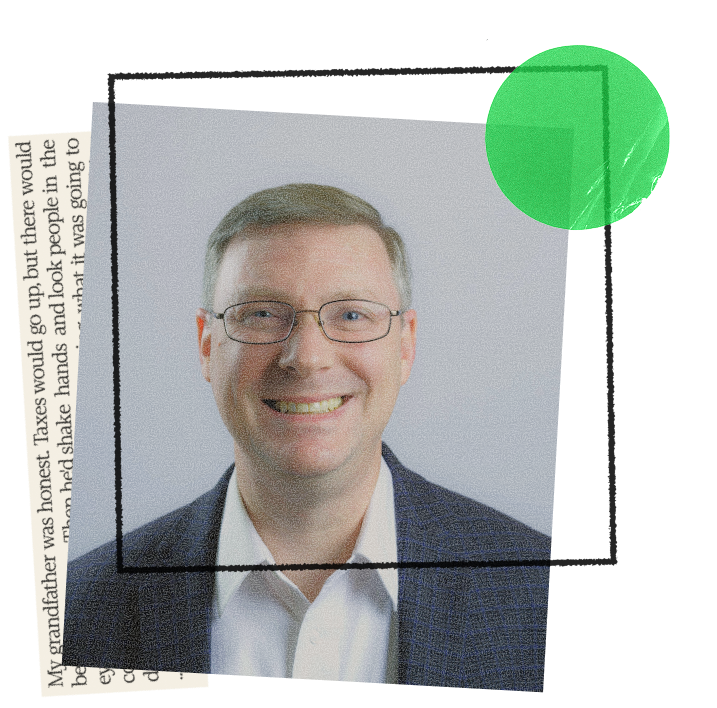
For Dave Leichtman, community involvement was a family tradition. The director of global elections at Microsoft remembers riding in his grandfather’s truck as a kid—climbing steep hills and canvassing farm to farm to build support for a new water district in rural Oklahoma. “My grandfather was honest with our neighbors. He said there would be piped water, but their taxes would go up,” Leichtman recalls. “He’d shake hands, look people in the eye, and tell them what he was proposing.”
Today, Leichtman carries those lessons forward to his daughters, discussing candidates and ballot measures with them well before Election Day. That commitment extends across Microsoft, where thousands of employees organize in support of National Voter Registration Day. Microsoft’s voter registration initiative picked up steam in 2019 and has since become a cornerstone of Microsoft’s Societal Resilience work—supporting civic engagement, safe and secure elections, and healthy information ecosystems.
As millions of Americans prepare to weigh in on congressional, state, and local races on November 3, Leichtman reminds everyone: “Make a plan. Know how you’re going to vote. Know what you need to vote. Know the deadlines.”
Participation in practice
Leichtman constantly encourages people to get involved in their communities and work alongside their neighbors. Microsoft employees are already answering the call, volunteering with the League of Women Voters, VoteRiders, and dozens of other civic organizations to help get out the vote.
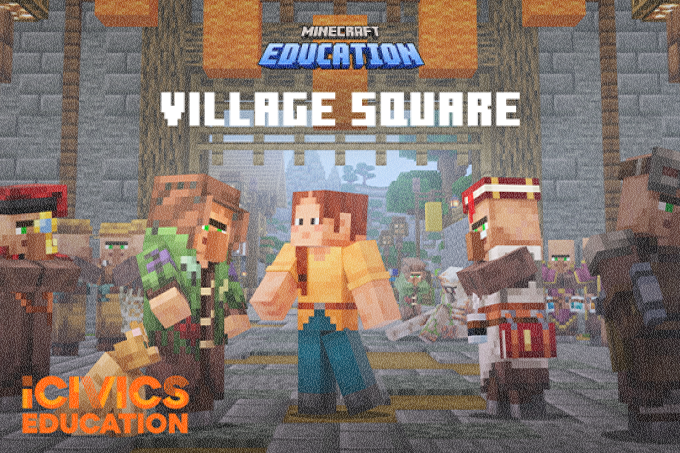
That spirit of participation inspired the virtual world of Village Square, a new game-based learning experience that began when the Tech for Society team approached Minecraft Education about collaborating with iCivics. Through gameplay, students explore the foundations of civic engagement—balancing competing community needs, making collective decisions, and seeing how every voice shapes the outcome.
Check. Recheck. Vote.
Lisa Reppell, senior program manager for information literacy, knew she had found her path when she attended her first community town hall in 2001. Held at a Boise public library, the discussion centered on the Patriot Act and the tensions between civil liberties and national security. “Those are two deeply important values that require debate in the public square,” she recalls. She now leads information literacy on the Elections and Societal Resilience Team at Microsoft—and that includes AI, increasingly a front door to election information.
Reppell’s team is preparing to launch a voter education initiative ahead of the midterms: Check. Recheck. Vote. Originally launched in 2024 to help voters recognize risks posed by deepfakes, or deceptive AI-generated content, this year’s campaign focuses on practical AI literacy. She says, “We’re really trying to respond to the reality that AI is starting to change the way that people are finding information about the election—whether people are going to an AI chatbot or doing their same old internet search but with an AI-generated summary.”
Check. Recheck. Vote. encourages voters to check sources and citations behind an AI-generated answer, recheck by visiting those sources and comparing what other credible sources say, and vote using official information. Reppell is encouraged to see that more voters are using AI to deliberately understand the candidates and issues on their ballots. “AI can clarify information and compare the data sources you bring to it, but it shouldn’t tell you who to vote for,” she says. “AI can’t make your judgments for you.”
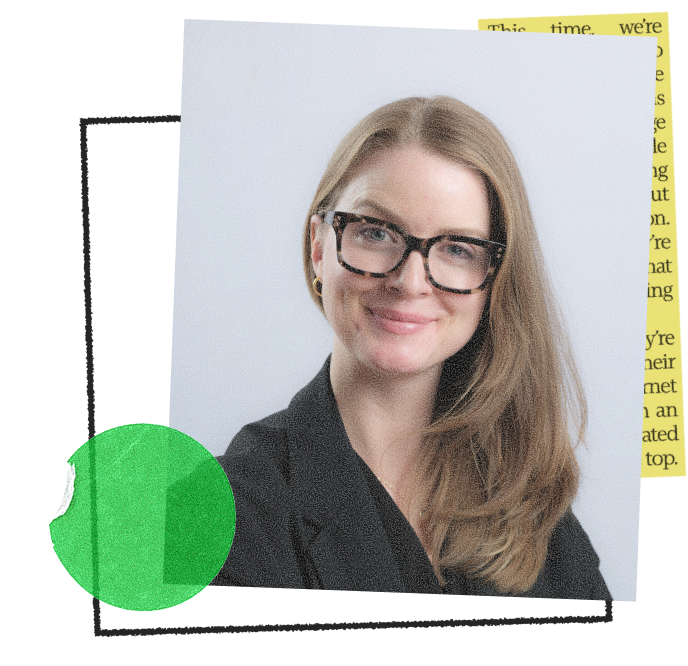
It’s important to increase critical awareness when using AI, but that’s only half the journey. You have to connect people with the next step: to get credible information.
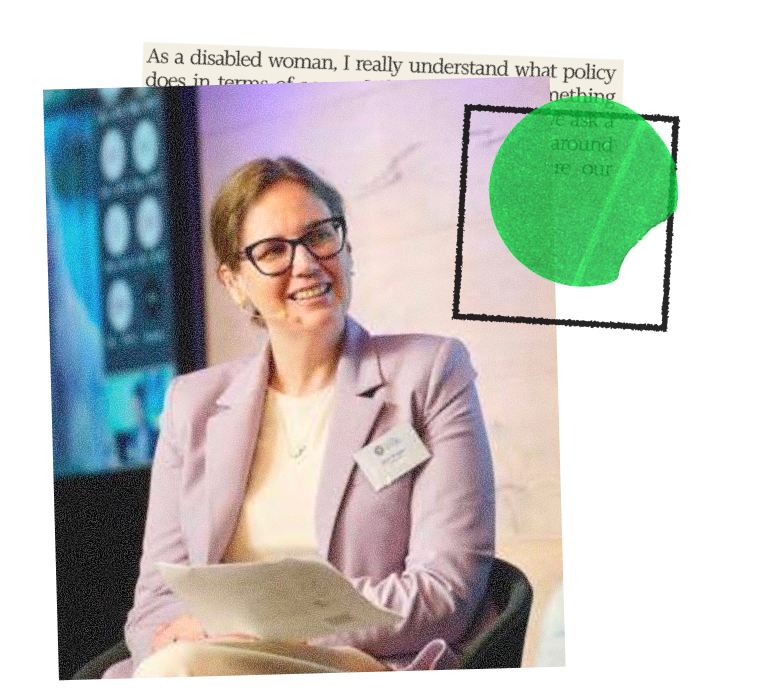
If every time we ask a question around voting, we also ask a question around the accessibility of voting, we can make sure our systems are working well for everyone.
Democracy is inclusion
Rylin Rodgers, director of global disability policy at Microsoft, says she was born for her role. Born in 1975—the year the U.S. guaranteed disabled students the right to a free appropriate public education—she was among the first generation of children to arrive at kindergarten with an individualized education program. Rodgers may not have known at five that her experience in Bellevue, WA was an outcome of public policy and advocacy, but over time, the connection became clear. “As a disabled woman, I really understand what policy does in terms of access.”
To keep elections accessible, Rodgers advocates designing systems with every voter in mind. She uses the example of curb cuts, which serve wheelchair users, as well as parents with strollers and people pushing shopping carts. Similarly, a polling place designed for someone who is blind or has low vision may also help an older adult or someone who forgot their glasses. “When we design something well, it works better for all of us,” she says.
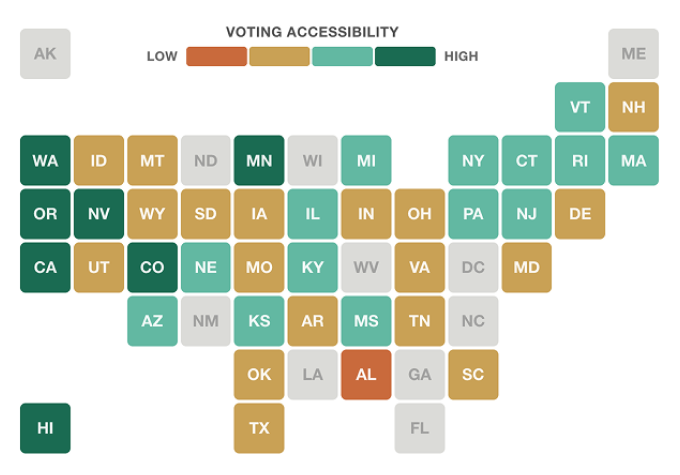
Putting that principle into action, Microsoft has partnered with the International Foundation for Electoral Systems to develop Election PATHS, a living database of election technologies and accessibility features. Drawing on information from tech providers and disability-rights advocates around the world, it equips election officials to make informed purchasing decisions. A related resource, the Accessible Democracy Tracker, measures voting-access barriers and opportunities at polling places nationwide.
The future is built together
Civic participation depends on people showing up. Not because everyone agrees. Not because every system is perfect. But because the communities we live in—and the future we share—are shaped by the people who choose to take part.
“It’s so easy to get involved locally. Go serve on a board or committee for the county or the schools that are not filled,” Leichtman urges. And the easiest way to stay civically engaged is to vote. He says, “You’ve got all this energy. You want to advocate for the things you care about. You want your voice to be heard. Take it to the ballot.”