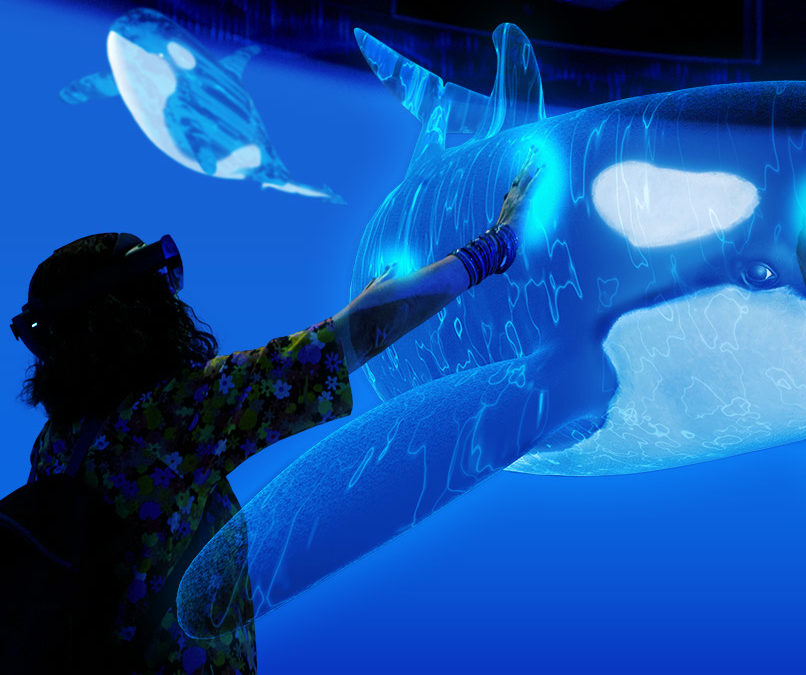
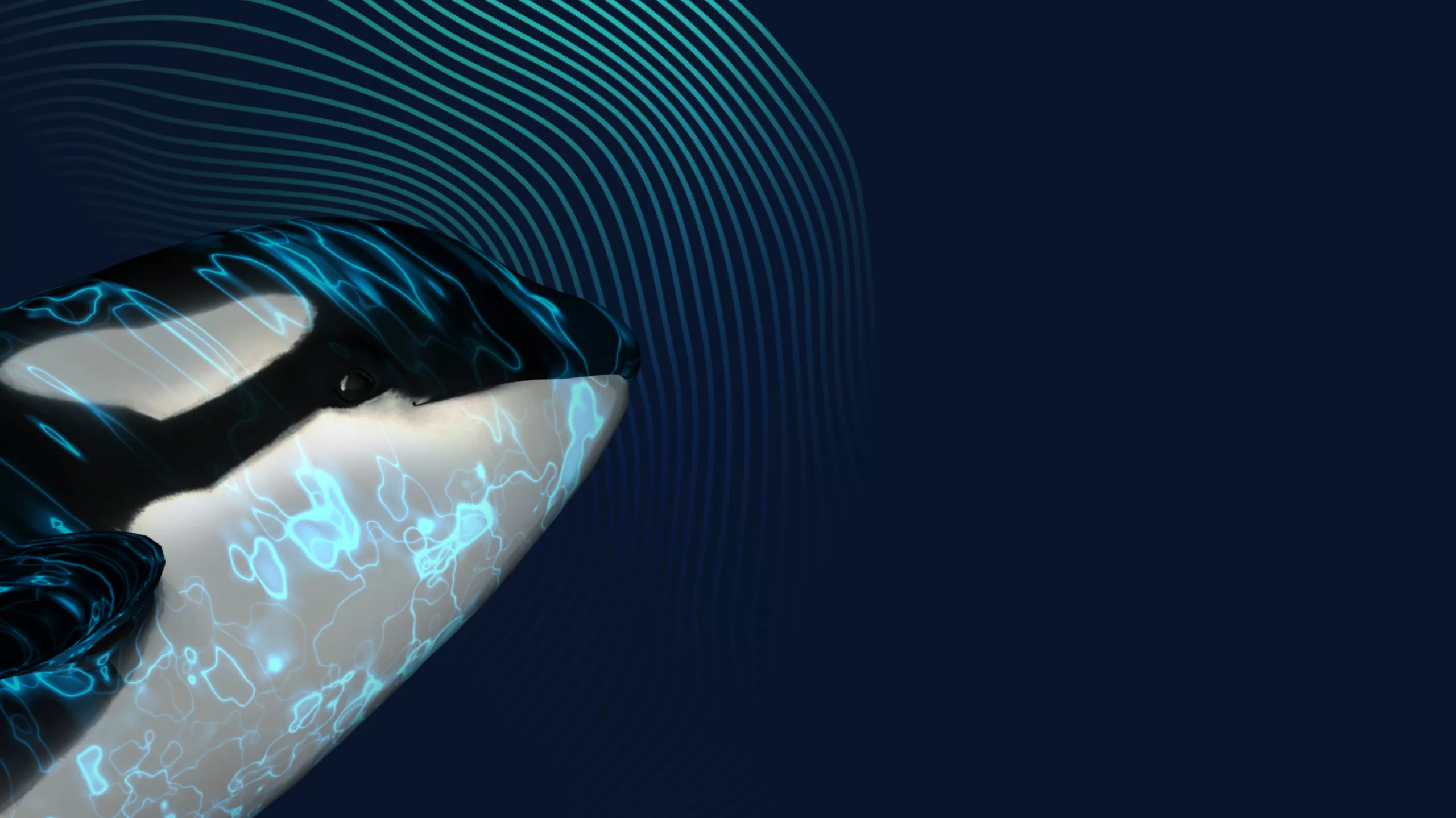
There are only about 75 southern resident orcas left in the world. In the waters of Washington’s Salish Sea, they are fighting to survive.
Orcas depend on sound to navigate, find food, and stay connected to one another. But the ocean is getting louder. Large commercial ships move through busy coastal waters daily, generating acoustic pollution. The underwater noise can interfere with the whales’ echolocation. Vessel traffic also poses a collision risk for the whales.
Imagine trying to hunt in a dense fog. That’s the challenge these marine animals face when the sounds they depend on are drowned out by global commerce.
“Resident orcas depend on their sounds underwater for basic life functions,” says Jason Wood, bioacoustics expert and Principal Scientist & Deputy Director of Technology at SMRU Consulting. “With a population this small, every missed meal matters. Every obstacle matters.”
And time is running short.
The ocean as a sensory network
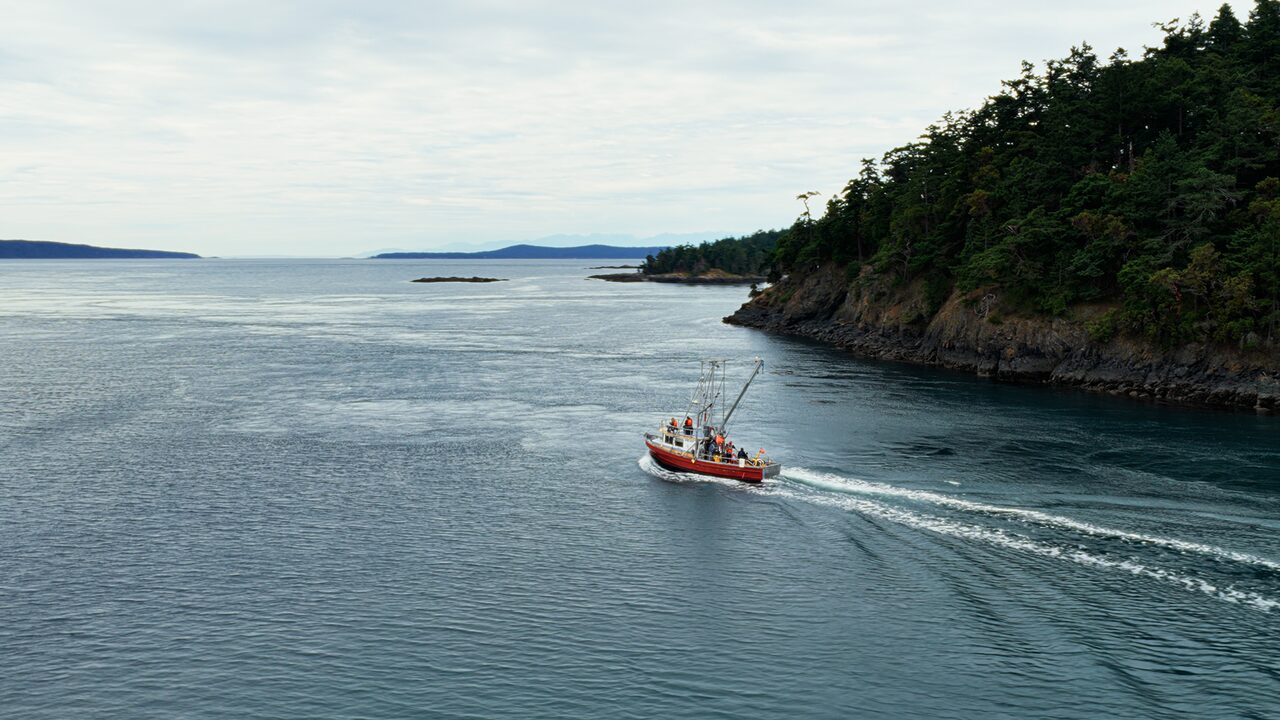
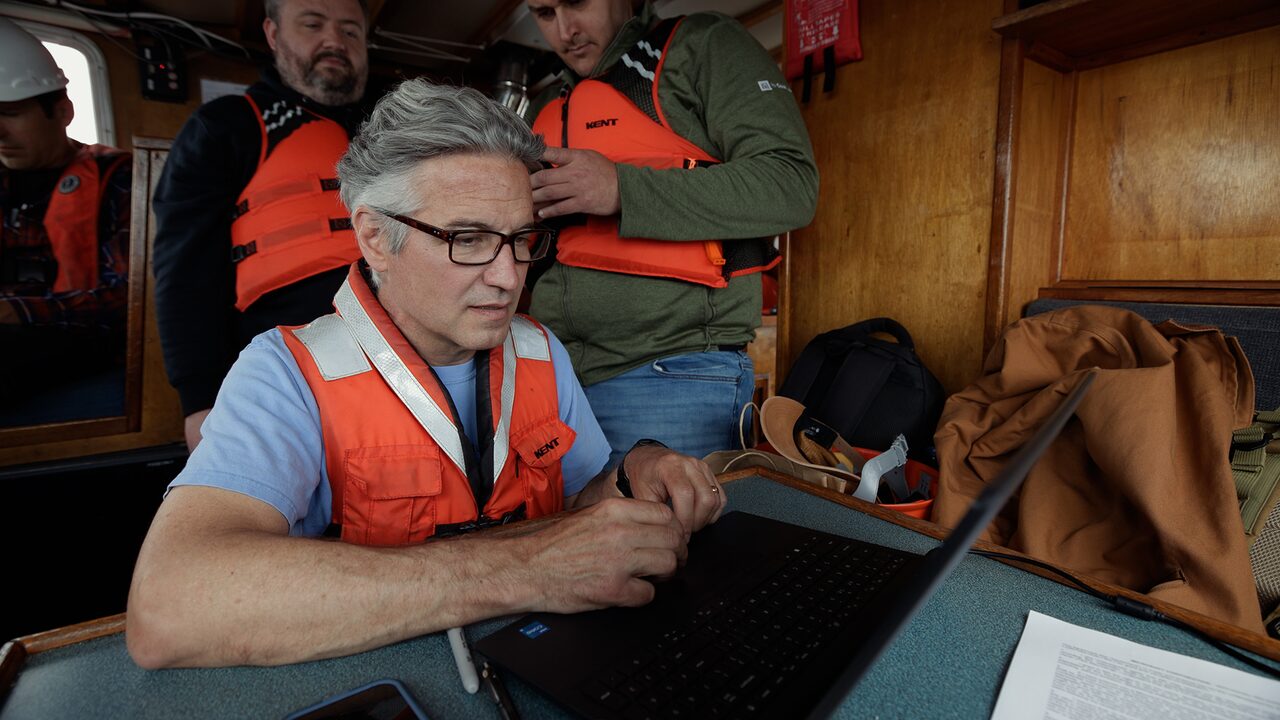
Conservationists need a way to detect whales in real time and share that information quickly enough for mariners to respond. Traditional monitoring methods haven’t always delivered the speed or scale required, so researchers at SMRU Consulting and Microsoft set out to build something different.
“How do we create some sort of autonomous system that listens to the ocean and gives us the data we need, in the timelines we need it, to the shipping industry?” says Wood.
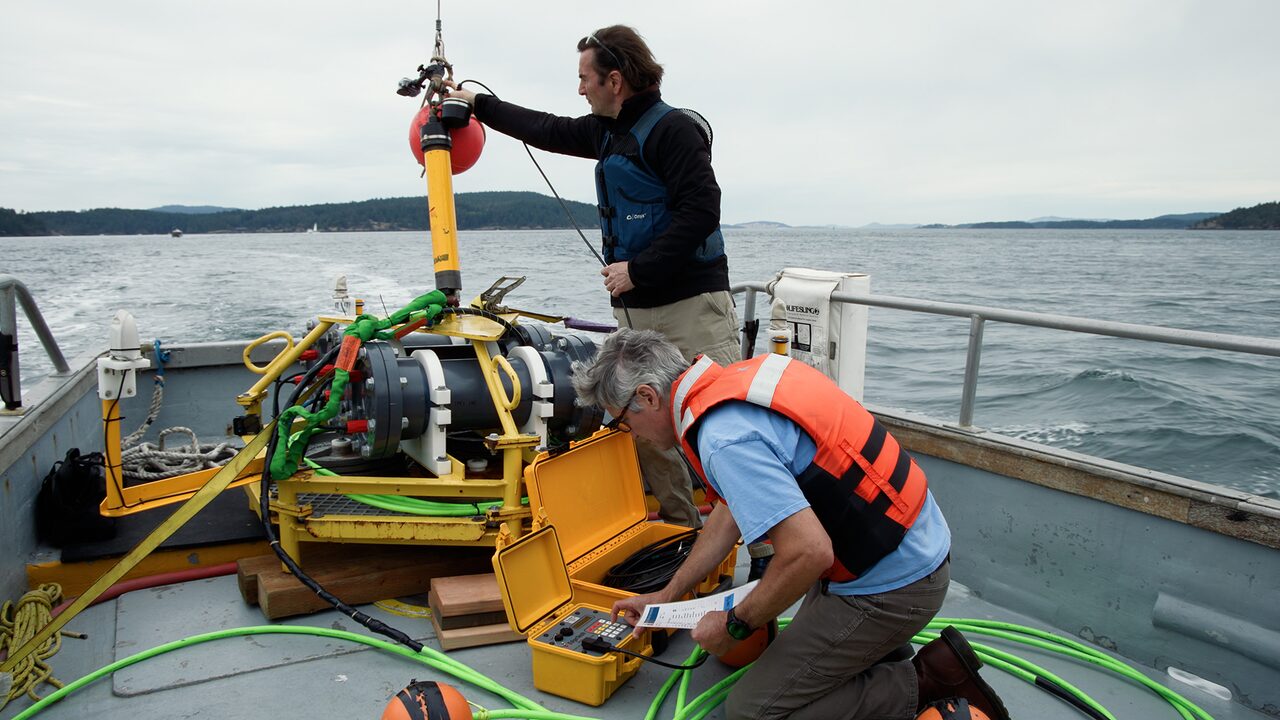
At the center of the project is the Communications Acoustics Buoy, or CAB—a floating platform that listens to the ocean around the clock. Anchored beneath the waves, hydrophones capture the rich soundscape of the sea while edge computing processes each incoming signal in real time to deliver rapid, robust insights. Together they search for the acoustic signatures of whales and other marine life. Solar-powered, the buoy is always listening—ready to send mariners an alert whenever endangered species are nearby.
“Large ships are usually quieter when they slow down. So, when we detect whales, we let mariners know to go slower to protect them,” says Rachel Aronson, Quiet Sound Program Director at Maritime Blue.
Hearing what humans can’t
As calls are detected by the buoy’s sensors, AI models classify what they’re hearing. Is it a southern resident orca? A humpback whale? A passing ship?
Instead of requiring conservationists to sift through endless hours of recordings, the system can identify patterns and make measurements automatically to scale. What once took countless hours of manual analysis can now happen in seconds. And this data changes everything.
With more precise detection and greater confidence in the data, whale sightings are now reported automatically to local mariners. Armed with real-time information, ship operators can adjust their course and their speed when whales are nearby, helping reduce underwater noise and collision risk during critical feeding periods.
“Having that flow of data in real time is a huge leg up,” says Aronson.
The orca’s soundscape
Move the slider to hear how a passing cargo ship’s speed affects an orca’s echolocation. Notice how ship noise can mask the sounds orcas rely on to communicate.
Small signals, global impact
The impact is stretching far beyond the Pacific Northwest. The challenge researchers face in the Salish Sea is shared by conservation teams around the world. Oceans generate vast amounts of acoustic data—far more than any individual scientist could realistically review. But AI is helping change that.
By automating detection and classification, researchers can monitor marine ecosystems at a scale that was previously impossible. The same technology helping protect southern resident orcas today could support conservation efforts for vulnerable species across oceans worldwide.
For the whales, the impact is immediate: quieter waters can improve their ability to find fish and feed successfully. This long-term recovery is an important first step that still depends on broader efforts, including protecting salmon populations.
By combining local expertise, environmental science, and AI, the project aims to help people better observe and respond to threats facing marine ecosystems today. Researchers believe that if this approach proves successful in Washington’s coastal waters, the same methods could be deployed in waterways around the world—supporting biodiversity and strengthening ocean conservation efforts wherever they’re needed.
Conservation moves at the speed of data. The future of some species depends on that speed.
The sound of preservation
The future of the southern resident orca remains uncertain, but this work demonstrates what’s possible when conservation science and AI come together. By turning underwater sounds into actionable insights, researchers can help protect wildlife while supporting the people who share these waters.
“These animals mean so much to our culture here in the Pacific Northwest. If we can prove this works here, then these same methods and tools can be deployed elsewhere to protect our oceans,” says Aronson.
Every whale call detected. Every vessel that slows down. Every new insight generated at the edge. Each one is a step toward a future where technology helps safeguard the ecosystems we all depend on.
The audio in the interactive feature is for demonstration purposes only. It illustrates the kinds of sounds researchers work with, and does not represent the actual recordings or interface used by the team. Whale sounds courtesy of The Whale Museum.
Whale footage at top of page provided by NOAA Fisheries – Filmed under NMFS research permit #18786.